Beyond the Vehicle: Dr. Wilmer Alvarez
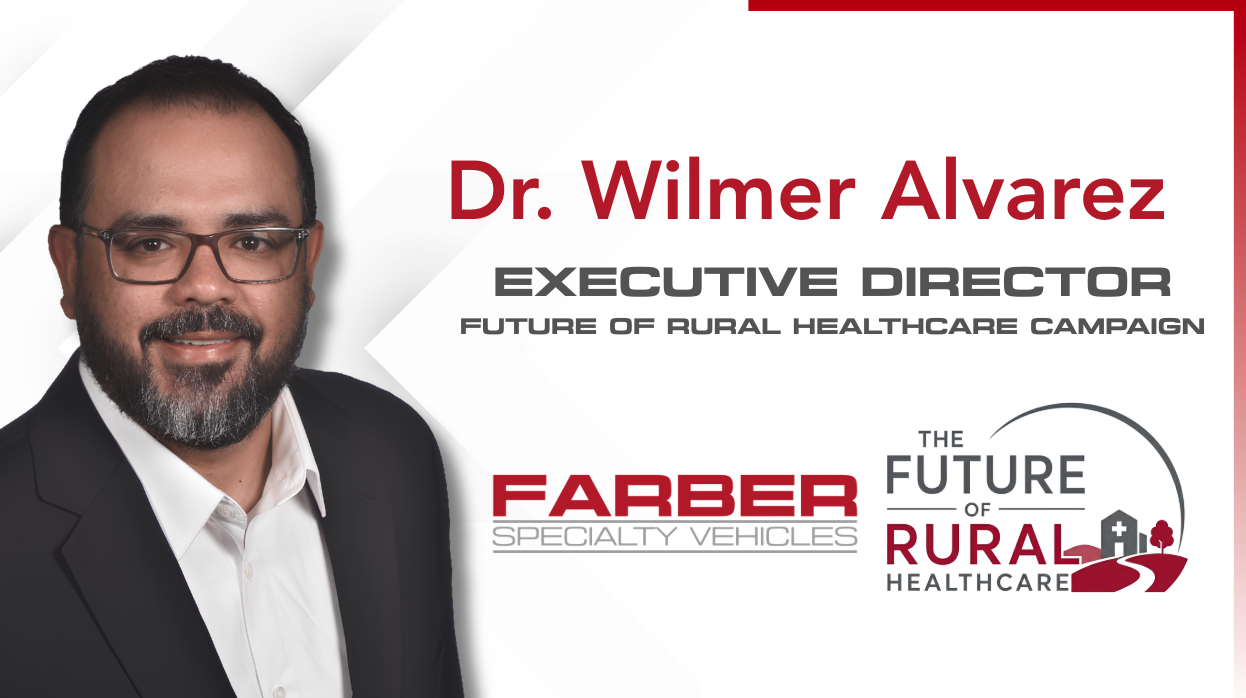
COLUMBUS, Ohio - For decades, American healthcare has followed a familiar model: patients travel to the place where care is provided.
Dr. Wilmer Alvarez believes rural communities increasingly need the opposite approach.
“The beauty of mobile units is that you bring the care to the patient wherever it is that they need it,” Alvarez said during a recent interview at Farber Specialty Vehicles in Columbus.
That idea is gaining attention as the federal government invests $50 billion in rural healthcare through the Rural Health Transformation Program.
The program provides $10 billion annually from fiscal year 2026 through 2030. Half of each year's funding is divided equally among approved states. The rest is allocated by the Centers for Medicare & Medicaid Services based on factors such as rural population, rural healthcare facilities and state-specific needs.
All 50 states applied, and CMS announced the approved awardees in December 2025. First-year awards average about $200 million per state, with individual awards ranging from roughly $147 million to $281 million. By August 2026, states had moved into implementation, with projects and funding processes underway.
The money creates an opportunity for rural providers. It also raises a practical question: How should organizations use it?
Alvarez, who has served as a grant and business consultant for over twenty years, is now executive director of Farber Specialty Vehicles' Future of Rural Healthcare Initiative. The program offers educational content, strategic guidance and support for organizations developing or expanding mobile healthcare services.
Farber, initially founded in Columbus in 1920 as a dealership, is a fourth-generation family-owned manufacturer of custom mobile and specialty vehicles and has a commercial interest in mobile healthcare because it builds the vehicles used by these programs.
The connection is straightforward. Organizations that purchase a Farber vehicle will also have the option to purchase Alvarez's consulting and program-development services as part of the process. Those services may include needs assessments, funding strategy, program design, implementation planning and evaluation.
Alvarez's interest in healthcare access began long before he joined Farber.
He grew up in the South Bronx in a family without health insurance and relied on neighborhood safety-net programs for basic medical care.
“My parents weren't well-to-do. We didn't have health insurance, yet we were very thankful to have the safety net programs around our neighborhood,” Alvarez said. Those experiences shaped his career in public and community health.
Alvarez studied public and community health at Cornell University and later earned an MBA from Rutgers University. He also earned a Ph.D. in Sociology focused on healthcare fraud, community health and health disparities.
Alvarez has more than 20 years of experience in healthcare access, grants, emergency preparedness, community health, workforce planning and program development and has been a past customer of Farber as a grant and project consultant for mobile health systems including the Children’s Health Fund.
Rural healthcare challenges are not limited to a lack of hospitals. Distance, staffing shortages, limited specialty care and the cost of maintaining fixed facilities all affect access.
Alvarez identified rural healthcare, specialty medicine and community pediatrics as areas where a traditional hospital model can be difficult to sustain. A fixed facility must be built, equipped, staffed and maintained. Patients must still find a way to reach it.
A mobile clinic can operate at a school, church, community health center or another location where residents already gather.
“The traditional healthcare models have been that the patient comes to care,” Alvarez said. Mobile healthcare reverses that model by bringing providers to patients.
That flexibility fits several goals of the Rural Health Transformation Program, including prevention, chronic disease management, behavioral health, prenatal care, workforce development, technology and innovative care models.
CMS allows mobile health units and telehealth capabilities as potential uses of the funding when they are part of a broader qualifying initiative. New construction is prohibited, although limited alterations and renovations may be allowed.
States still have considerable control over how the money is distributed. “Some of them will allow you to purchase a mobile clinic, some of them won't,” Alvarez said.
Alvarez’ advice may seem surprising: Do not begin with the vehicle. Begin with the community. “Let's research our entire ecosystem,” Alvarez said. “Let's understand what needs we're trying to address.”
That research should include more than hospitals and physicians. Transportation, employment, nutrition, schools, social services, nonprofits and local government can all affect whether a healthcare program succeeds.
Alvarez pointed to the County Health Rankings model, developed by the University of Wisconsin Population Health Institute with support from the Robert Wood Johnson Foundation. The model considers clinical care alongside health behaviors, social and economic conditions and the physical environment.
That broader view can help determine what kind of mobile program a community actually needs.
One community may need a 40-foot clinic with several examination rooms. Another may be better served by several smaller vehicles that can cover multiple locations. A smaller vehicle may also work alongside existing space at a school, church or community building.
The vehicle should fit the program, not the other way around.
Scale also creates opportunities for smarter, more coordinated care. Operating several mobile clinics involves more than purchasing vehicles. Each unit may require drivers, clinicians, registrars, insurance, fuel, maintenance, scheduling and logistical support, making thoughtful planning especially important as programs grow. “When you have multiple vehicles, then the biggest challenge is scale,” Alvarez said.
That scale can also give organizations greater flexibility. A medical clinic might operate alongside a dental unit, allowing patients to receive multiple services during a single visit. Programs can also adjust routes, schedules or locations based on demand, helping organizations place resources where they can have the greatest impact.
“You could literally just pack it up and drive it 10 miles north,” Alvarez said. “And that's the beauty of mobile health.” A fixed facility cannot be moved when population patterns or community needs change.
Alvarez recalled one client that built a comprehensive pediatric facility for approximately $200 million. Once built, the facility remained tied to its location, regardless of changes in demand.
Mobile healthcare allows a system to move capacity instead.
Mobile clinics can support advanced equipment and specialty services, but Alvarez said primary care remains one of the most important opportunities. “I will always live and die by primary care,” he said. He pointed to diabetes, heart disease and other chronic conditions that require regular management. The federal program also emphasizes prevention, chronic disease management, behavioral health and prenatal care. Alvarez sees additional opportunities in pediatrics, mental health, cardiology, oncology, dermatology, asthma treatment and cancer screening.
A mobile clinic can be designed as a hybrid platform. One section might support primary care while another provides a specialty service. “The difference between a mobile clinic and a fixed site location” is the ability to adjust the mission, Alvarez said. If community needs change, the vehicle can potentially be reconfigured or moved rather than abandoned.
The Rural Health Transformation Program is funded for five years. The programs it supports will need to last longer. CMS has instructed states and providers to consider sustainability from the beginning. Federal guidance discourages using the money for ongoing expenses without a plan for continuing the work after the funding ends. “You have to look at sustainability starting year six and being on your own year six,” Alvarez said.
A mobile clinic may operate for 10, 15 or even 20 years. Its financial model cannot depend entirely on a five-year grant. Alvarez said organizations should consider patient billing, Medicare and Medicaid reimbursement, commercial insurance, philanthropy, future grants, community fundraising and other revenue sources. Federal funding can help launch a program, but it cannot replace long-term planning. “At the end of the day, we're reporting on impact. We wanna have impact,” Alvarez said.
That means organizations should establish measurements before the clinic opens. A maternal health program, for example, might track premature deliveries or low birth weights. Those goals should shape the program's design, partnerships and data collection.
The funding creates an opportunity for independent hospitals, regional systems and smaller organizations that may not have the grant departments of larger healthcare networks.
Alvarez said smaller organizations should not try to copy large systems. Their advantage may be the trust they have built locally. “If you're still around as an independent, you're doing something right,” he said. That trust can help when an organization introduces a new service, seeks partnerships with schools or community groups, or asks local businesses and donors for support.
Mobile healthcare programs often depend on partnerships that have little to do with medicine.
Alvarez described a pediatric program that needed a place to store its clinic. An auto body shop had enough space for the vehicle, and the owner agreed to provide access.
The arrangement solved a practical problem for the healthcare program.
Other partnerships may involve schools, WIC organizations, dental practices, mental health providers, food banks, diaper banks, specialists, nonprofits, local businesses and foundations.
“You're not gonna be able to provide everything to the patient,” Alvarez said. “As a result, you have to partner with other organizations.”
Professional associations can also help mobile healthcare providers compare approaches, learn from mistakes and share ideas. “Those little nuances could change programs dramatically,” Alvarez said.
Rural healthcare funding is part of a political debate, especially when federal spending reaches tens of billions of dollars. Alvarez said the delivery of care should remain focused on patients.
“Heart attacks are apolitical,” he said. “Cancer doesn't have a political party.”
Communities may disagree about policy and financing while still sharing an interest in better access to care.
Alvarez also advised organizations to communicate with local elected officials, listen to their concerns and remain transparent without allowing political disagreements to stop useful programs.
A mobile clinic is visible in a way that most fixed facilities are not. That visibility can create opportunities for corporate sponsorship and cause marketing. Alvarez recalled working with a program that operated 50 mobile clinics across the country and recognized corporate supporters on the vehicles. Sponsorships can help support a program, but organizations need clear boundaries. A smoking-cessation program, for example, would face an obvious conflict if it accepted money from a tobacco company.
There is also a limit to how much branding a clinic should carry. “You also don't wanna turn your mobile clinic into a NASCAR,” Alvarez said. “And I don't have anything against NASCAR. I actually like NASCAR.”
The goal is to support the healthcare mission without overwhelming it.
“One plus one is two, and two is better than one,” Alvarez said of combining federal and private funding. “When we leverage this funding with your funding, we could do more.”
Farber's Future of Rural Healthcare Initiative is designed to connect vehicle construction with program planning. The company says Alvarez will work with organizations on needs assessments, funding, vehicle configuration, implementation and evaluation. Farber also plans to publish articles, interviews, videos and other educational resources.
“This is the best of both worlds,” Alvarez said. “It gives you not only access to the technical side of building a clinic, of thinking through a mobile clinic, but it also gives you the programmatic piece, sort of the actual implementation.” The success of a mobile health program should not be measured by whether a vehicle was delivered or grant money was spent. The more important questions are whether access improved, whether patients used the service, whether health outcomes changed and whether the program continued after the grant ended.
The Rural Health Transformation Program is now moving from planning to implementation.
The details vary by state. Organizations should monitor their state health departments for information about applications, allowable expenses, subawards and implementation schedules.
For organizations that have already received funding, Alvarez said planning should begin immediately.
“Before the ink is dry, know what's next,” he said. That includes deciding who will be hired, which organizations will become partners, where the clinic will operate, how patients will learn about it and how the program will be funded after the federal money ends.
For Alvarez, the central issue remains access. “The future of healthcare isn't about bringing patients to care. It's about bringing care to patients.”